Reliable estimation of wind potential over long periods is essential for planning effective wind farms, especially in mountainous areas where complex terrain can affect wind behaviour.
This recently published study, conducted within the Crete Valley project and titled Application of Measure–Correlate–Predict (MCP) Methodology for Long-Term Evaluation of Wind Potential and Energy Production on a Terrestrial Wind Farm Siting Position in the Hellenic Region, focuses on the long-term evaluation of wind resources and energy production for a wind farm siting location in the Hellenic region.
The approach combines short-term wind measurements collected on-site with a twenty-year dataset from Copernicus ERA5. These are linked using a Measure–Correlate–Predict (MCP) methodology, which has been refined to better capture wind patterns in complex terrain by including a time-adjustment step.
To make the results more reliable, the study considers different sources of uncertainty, such as measurement conditions, modelling choices, and terrain effects. These factors are analysed together and included in the final energy estimates using established calculation methods.
The methodology makes it possible to estimate both the expected energy production and the probability of achieving certain production levels over a twenty-year period. This provides a clearer picture of potential performance and associated risks.
Overall, the approach offers a practical way to estimate long-term wind potential and energy output, supporting more informed and reliable decision-making for wind energy projects in challenging locations.
—
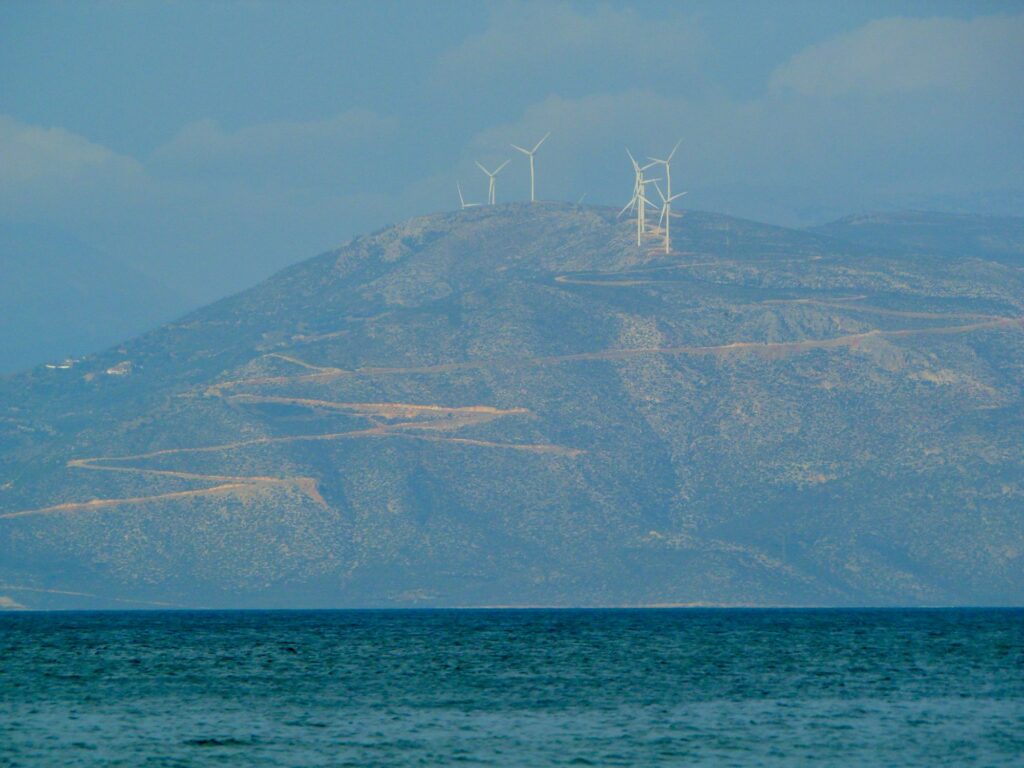
Picture by Feri & Tasos on Unsplash





