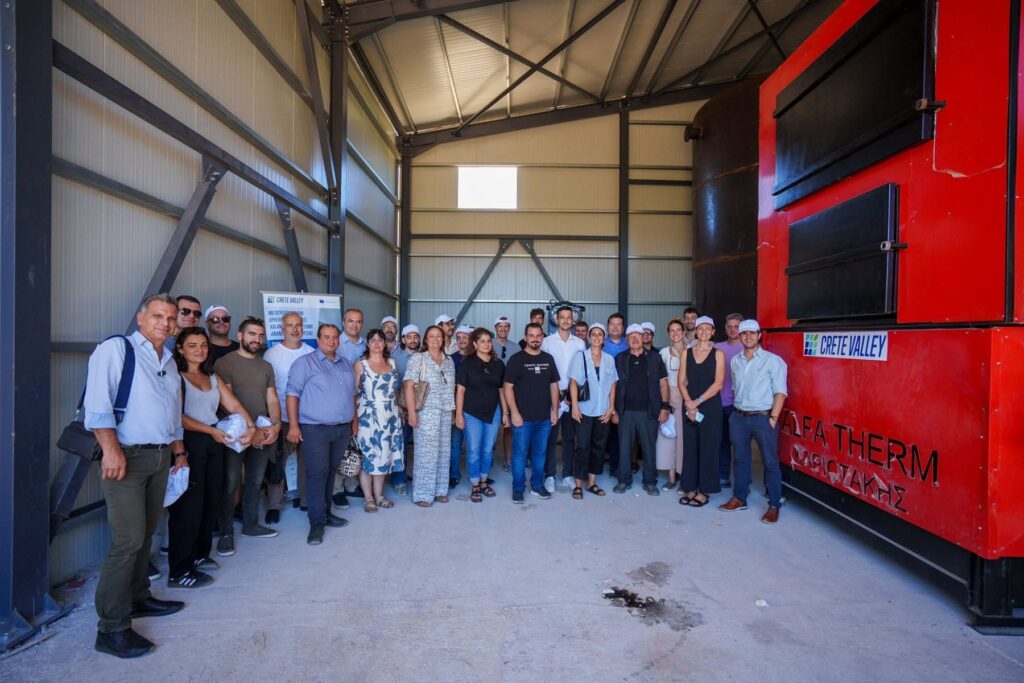
The CRETE VALLEY consortium gathered in Crete for the project’s second review meeting, bringing together partners, technical experts, and project reviewers for two days of discussions and site visits to assess progress, exchange knowledge, and explore the latest developments across the project, while identifying the next steps towards establishing the Renewable Energy Valley Living Lab (REV-Lab).
Project partners presented the advancements achieved over the past year, the progress within the Community Energy Labs (CELs), and engaged in fruitful discussions on approaches to encourage citizen participation, replication mechanisms, and the connection between the CELs and the REV-Lab.
The exchanges highlighted how the systems being implemented across the CELs will ultimately come together to form the REV-Lab, demonstrating how different renewable energy solutions can operate as part of a connected Renewable Energy Valley. As the implementation of the systems progresses, this infrastructure and the links between the CELs will become increasingly visible.
Renewable energy solutions taking shape in Arvi and Arkalochori
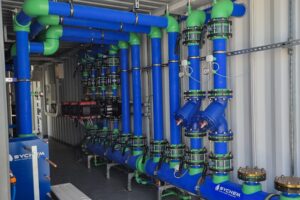
In Arvi, the consortium visited the Port of Arvi and the plant room hosting the geo-exchange system, a key component of the local energy solution. At the heart of the system is a seawater-based open-loop geo-exchange network that uses seawater from the port as a stable thermal source. Coupled with high-efficiency heat pumps, the system will provide renewable heating and cooling to participating households, reducing dependence on conventional energy sources while improving energy efficiency and comfort.
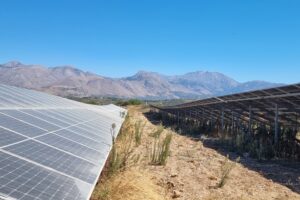
In Arkalochori, attention focused on the biomass plant and the photovoltaic (PV) park, which are at the core of the local energy system. Fuelled by locally sourced agricultural residues, such as olive tree trimmings, the biomass plant will provide heat to residential and public buildings, while the PV park will generate renewable electricity, increasing local energy self-sufficiency. Together, these technologies illustrate how different renewable energy sources can be integrated into a locally tailored and resilient energy solution.
Finally, the testbed of the Hellenic Mediterranean University (HMU) in Heraklion provided an opportunity to explore the testing and validation activities underway for Windmill1, CRETE VALLEY’s first electricity-generating windmill.
Looking ahead
With infrastructure deployment advancing across the CELs, CRETE VALLEY is moving from planning and design into tangible implementation. The renewable energy solutions taking shape in Arvi and Arkalochori demonstrate how local resources, innovative technologies and community engagement can be combined to accelerate the clean energy transition.
As these systems become operational and increasingly interconnected, they are forming the foundation of a fully integrated Renewable Energy Valley, providing a replicable model for other islands and regions across Europe.





