MIRES

Can green hydrogen revolutionise transportation, turning it into a sustainable sector and significantly reducing carbon emissions?
Mires stands out for its transition into a Hydrogen Valley, a transformation led by the project Crete-Aegean Hydrogen Valley (CRAVE-H2), that we actively contribute to, enhancing efficiency and effectiveness.
Contacts
Can green hydrogen revolutionise transportation, turning it into a sustainable sector and significantly reducing carbon emissions?
Mires stands out for its transition into a Hydrogen Valley, a transformation led by the project Crete-Aegean Hydrogen Valley (CRAVE-H2), that we actively contribute to, enhancing efficiency and effectiveness.
About MIRES
Situated 50 km southwest of Heraklion Town, Mires is known for having become a Green Hydrogen (H2) Valley. The planned hydrogen production facility will annually produce hydrogen using renewable electricity from dedicated photovoltaic plants and, in the future, from the Ten Year National Development Plan “Greece Africa Power Interconnector (GAP)” which will supply the IPTO and HEDNO grid with low-cost electricity from renewable solar parks based in Egypt.
Hydrogen production contributes to energy flexibility, addresses seasonal energy demand surges, and reduces the island’s reliance on oil-dependent generators, thus lowering GHG emissions. Since hydrogen production will be powered by the Greece-Africa power interconnection, allowing for cost-effective PV power to be introduced into the Greek (and via that to the European) electricity and hydrogen market, the project has attracted great attention from European authorities as a promising cross-border project.
The community’s need
The area of Mires requires in particular indoor space heating.
Our solution
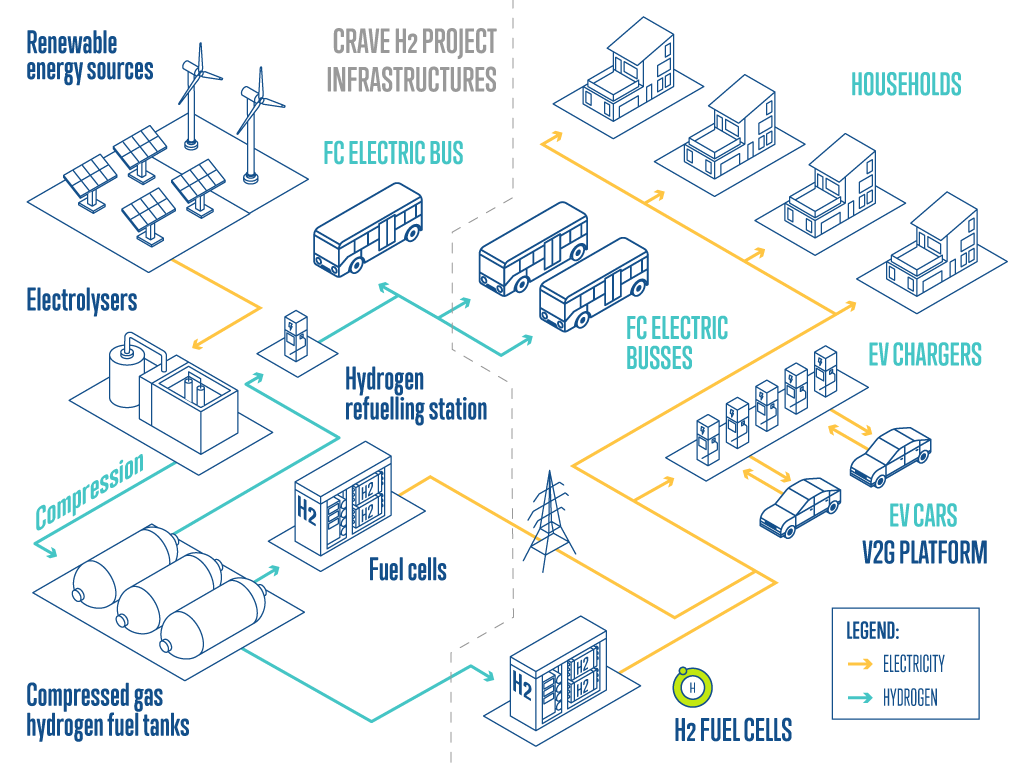
We will expand the potential applications of green hydrogen generated by the CRAVE-H2 project by securing additional hydrogen fuel cell electric buses. This will showcase the effective use of hydrogen in the transportation sector and its capacity for reducing carbon emissions. Another demonstration of hydrogen’s versatility is its use in fuel cells for electricity production, powering EV (electric vehicles) chargers and supplying green electricity to the grid, meeting nearby communities’ heating and electrical needs.
Additionally, the project will seek to advance the operation of EV chargers to support vehicle-to-grid (V2G) applications.
Community composition
60 residential and commercial buildings
Benefits
Nearly 20% energy savings
55% operating costs for transportation


Explore other Community Energy Labs
Latest updates
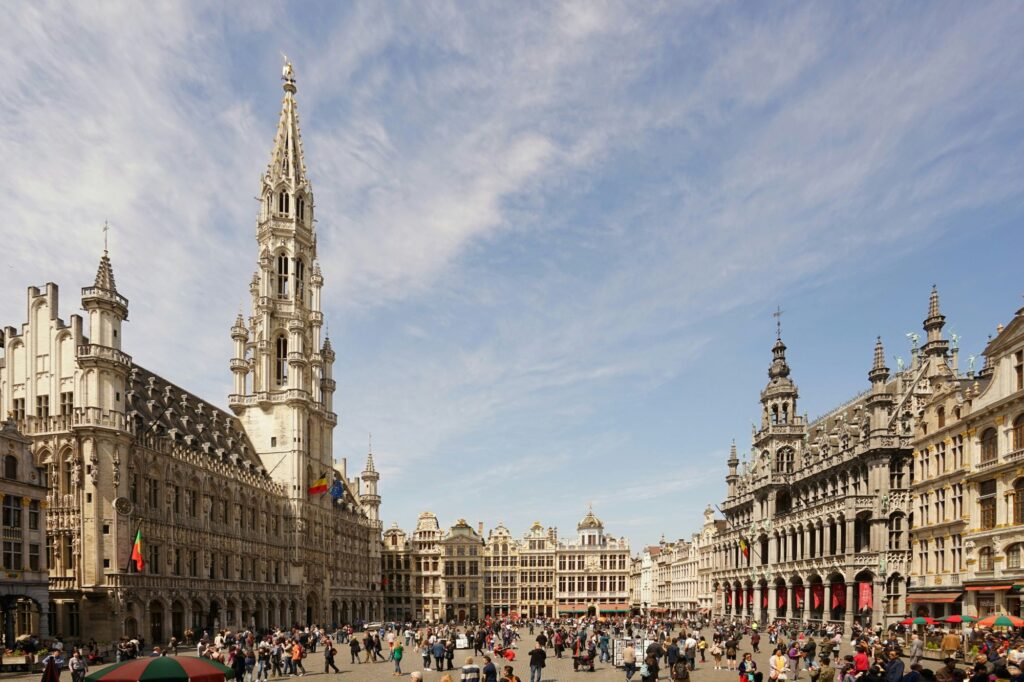
Energy valleys, human stories: CRETE VALLEY at the European Week of Regions and Cities 2026
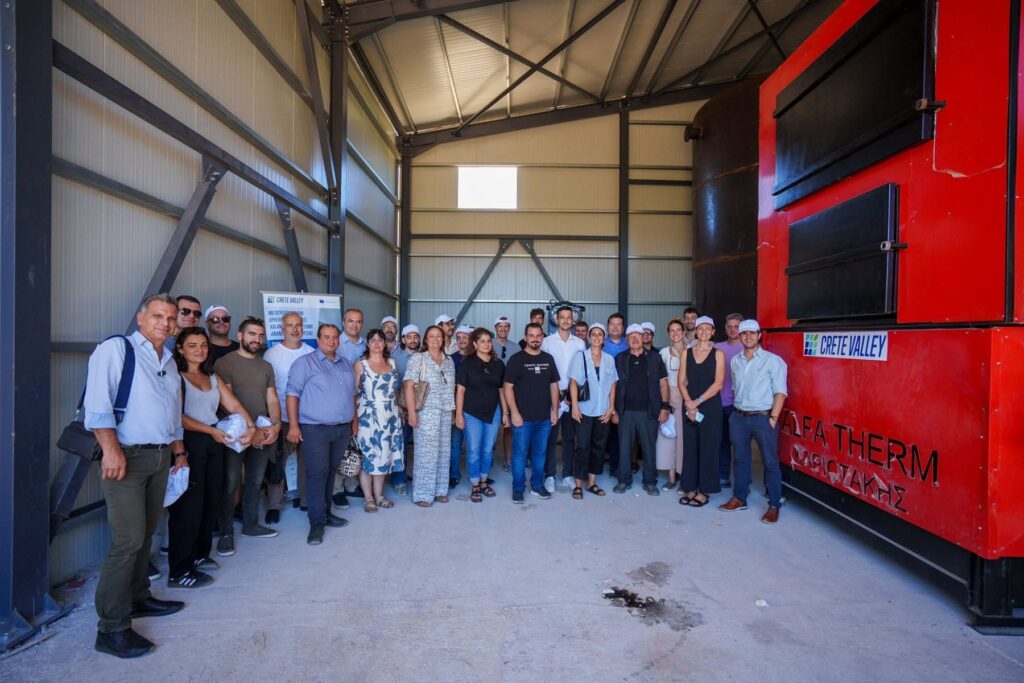
CRETE VALLEY advances towards a REV-Lab: partners visit renewable energy technologies Arvi and Arkalochori
The second CRETE VALLEY review meeting brought project partners together in Crete to assess progress achieved across the project and discuss the next steps towards the Renewable Energy Valley Living Lab (REV-Lab). The meeting combined technical discussions on implementation, citizen engagement and replication with site visits to Arvi and Arkalochori.



Co-funded by the European Union under grant agreement no. 101136139. Views and opinions expressed are however those of the author(s) only and do not necessarily reflect those of the European Union or CINEA. Neither the European Union nor the granting authority can be held responsible for them.


