What does the energy transition look like on the ground? According to CRETE VALLEY’s latest publication, it starts with local resources, community involvement, and solutions designed around real needs.
Authored by MINOAN, the report presents the first official documentation of the Crete Renewable Energy Valley Living Lab (REV-Lab), providing a comprehensive overview of how Crete’s network of community-based renewable energy systems is being designed, prepared, and brought closer to real world implementation.
The report is the first in a series of three publications that will follow the full lifecycle of the REV-Lab, from engineering design to construction and operation. While future reports will document installation progress and commissioning, this initial version focuses on the engineering design and preparatory stages of the REV-Lab activities.
The document describes the REV-Lab as the physical and conceptual backbone of the CRETE VALLEY initiative, established to create a coherent ecosystem of innovation, where research institutions, local authorities, and citizens collaborate to accelerate the energy transition of Crete through practical demonstration sites.
This distributed Living Lab is made up of the four Community Energy Labs (CELs) located in Arvi, Lasithi Plateau, Arkalochori, and Mires. Instead of proposing one size fits all solutions, the REV-Lab adapts renewable technologies to the specific social, environmental, and economic context of each location.
- In Arvi, coastal households will soon benefit from shared geothermal heating and cooling, powered by solar electricity collectively owned by the community.
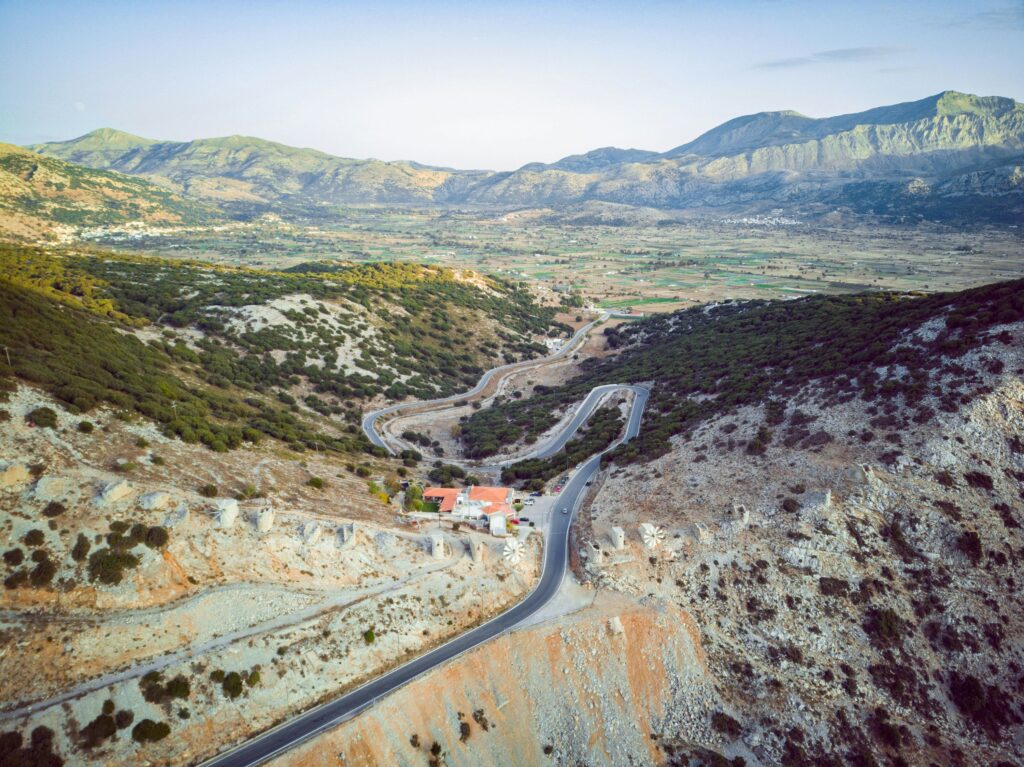
- In the Lasithi Plateau, farmers and residents are turning agricultural residues into biogas while reviving historic windmills to produce clean power once again.
- In Arkalochori, local biomass fuels a district heating network that brings renewable heat directly into homes and public buildings.
- Meanwhile, Mires is preparing for the future by exploring green hydrogen as a way to store renewable energy and support clean transport.
The report explains how these systems are sized, how energy is shared among participants, and how citizens can actively take part through community energy schemes, digital tools, and transparent governance models. It also documents the regulatory and permitting progress, showing how local authorities, municipalities, and project partners are working together to turn innovative ideas into compliant, real installations.
By presenting the technical, regulatory, and social foundations of the REV-Lab, this publication demonstrates how renewable energy transition can be built with, and not just for, local communities. It positions Crete as a real world testbed for decentralised, clean, and inclusive energy systems that can be replicated in other European regions.
Read and download the full report here.
—
Photo by Joshua Kettle on Unsplash.


